Track research trends, public sentiment, market signals, and claim consistency across the peptide ecosystem. AI agents and live web data, transformed into educational research aggregation.
I built it solo in six hours for my first hackathon, the 2026 San Francisco Apify AI Agents Hackathon hosted at the AWS Builder Loft. I won 3rd place, plus was the sole recipient of a separate prize awarded by a CTO.
Scope of Work
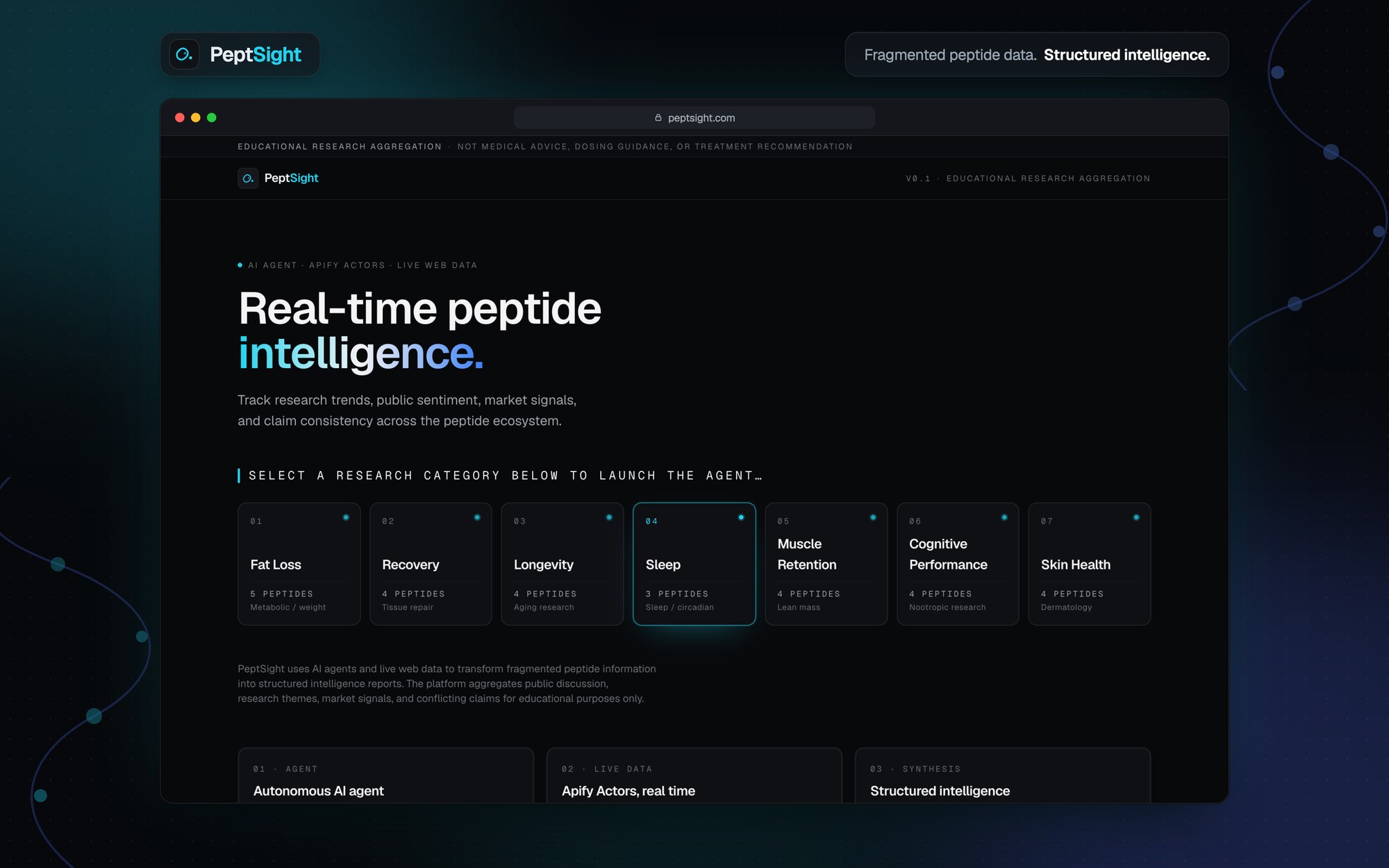
Peptide information is scattered across Reddit threads, forums, research papers and vendor sites, and hype spreads faster than evidence. It's hard to tell what's actually trending, what people are experiencing, and whether the claims hold up. PeptSight pulls those signals into one place so people can research peptides with context instead of guesswork.
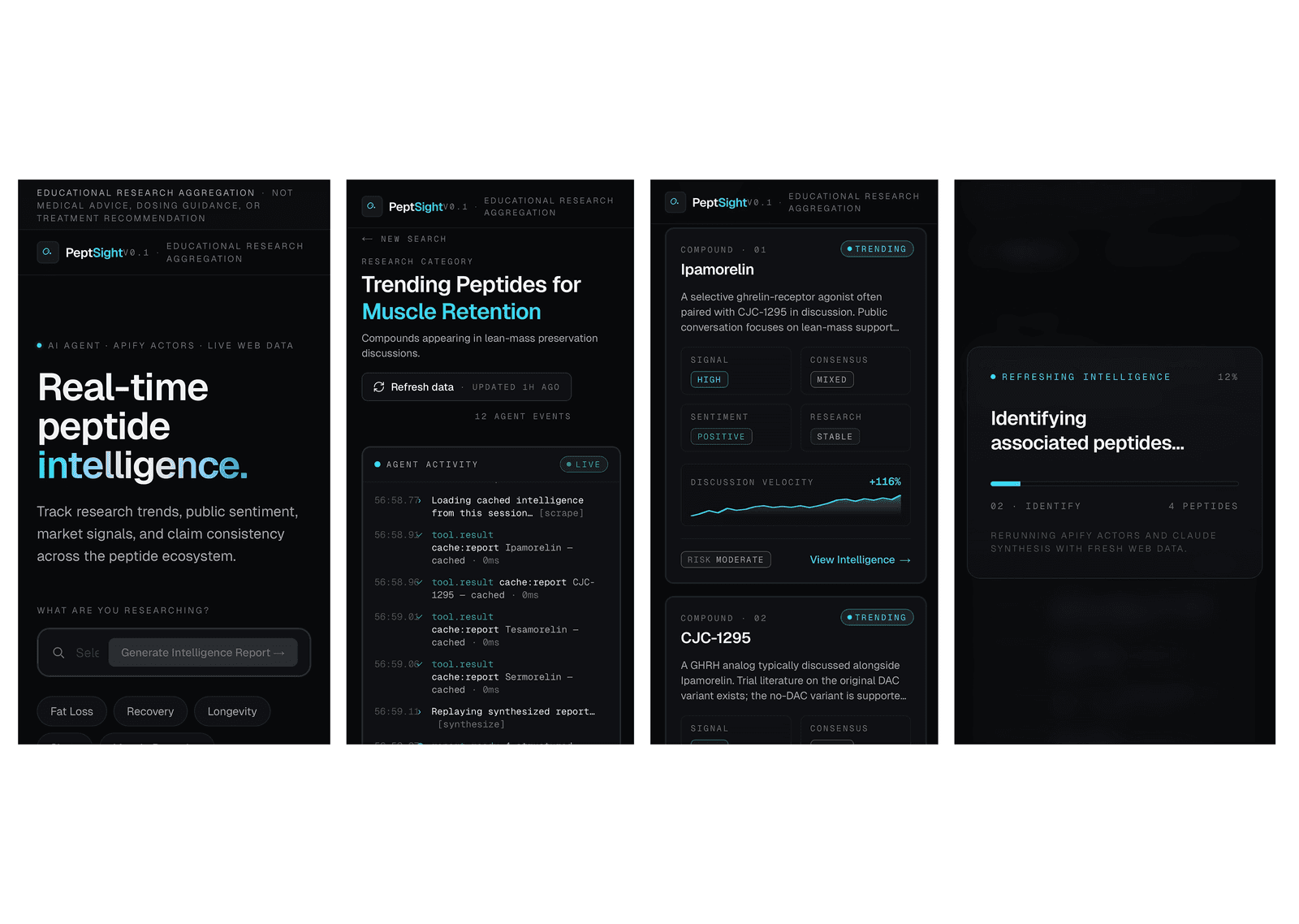
I initially designed the product search around peptide names. Then I realized consumers don't start with a compound; they start with an outcome they care about, like losing fat, sleeping better or recovering faster. So I rebuilt it around seven category cards (Fat Loss, Recovery, Longevity, Sleep, Muscle Retention, Cognitive Performance and Skin Health), each showing its peptide count and a short description, so people can start from their goal and let the agents find the relevant peptides.
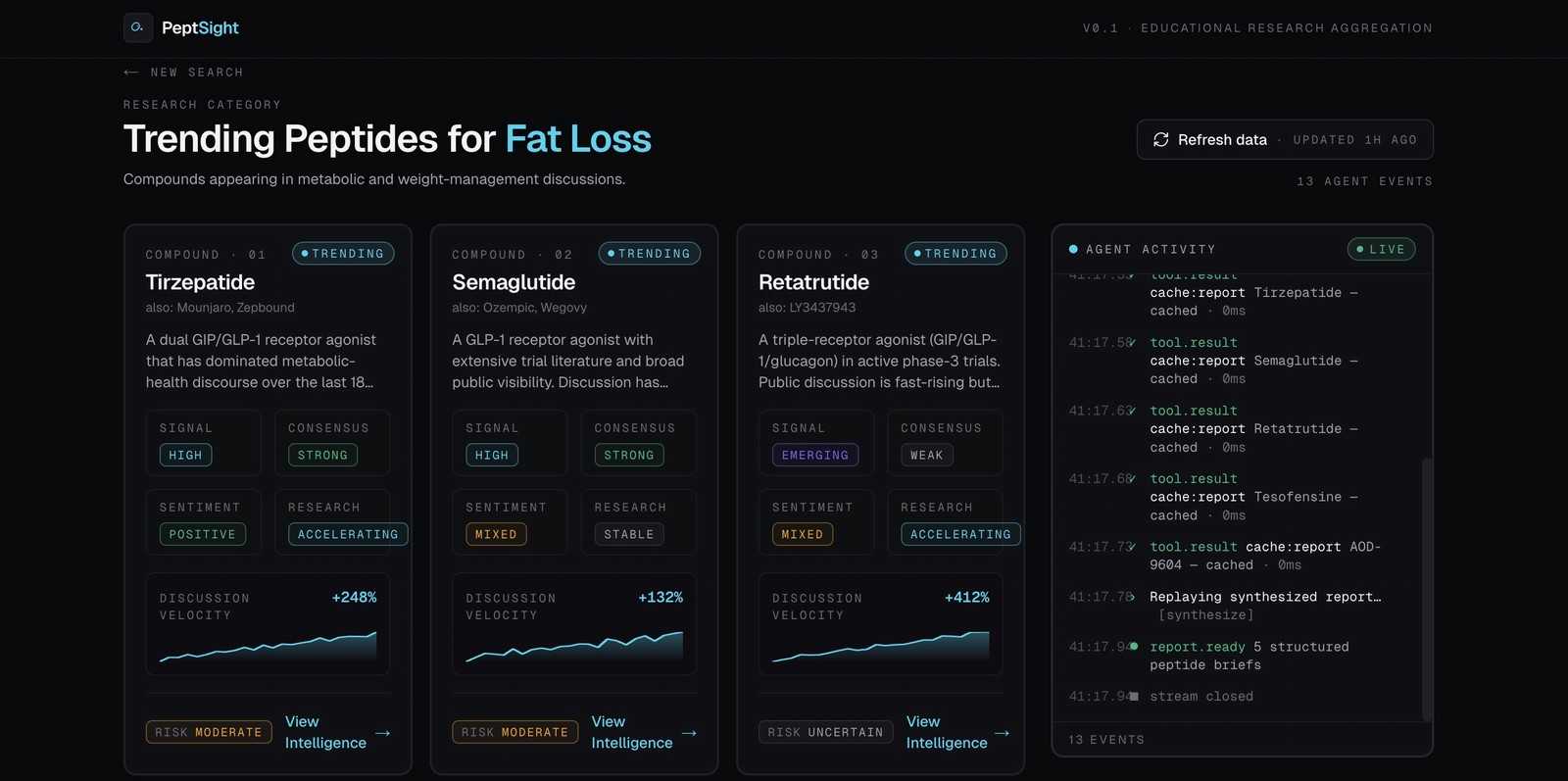
Each report turns the research into scannable signals: signal strength, discussion velocity, research activity, sentiment, risk level and how much the sources agree. Trend charts and sparklines show how discussion is changing over time, with the percentage change called out so a rising peptide stands out at a glance. Because the topic sits close to medicine, I designed it to read as educational research rather than advice: sources are labeled by type, conflicting claims are shown side by side, and a disclaimer stays visible throughout.
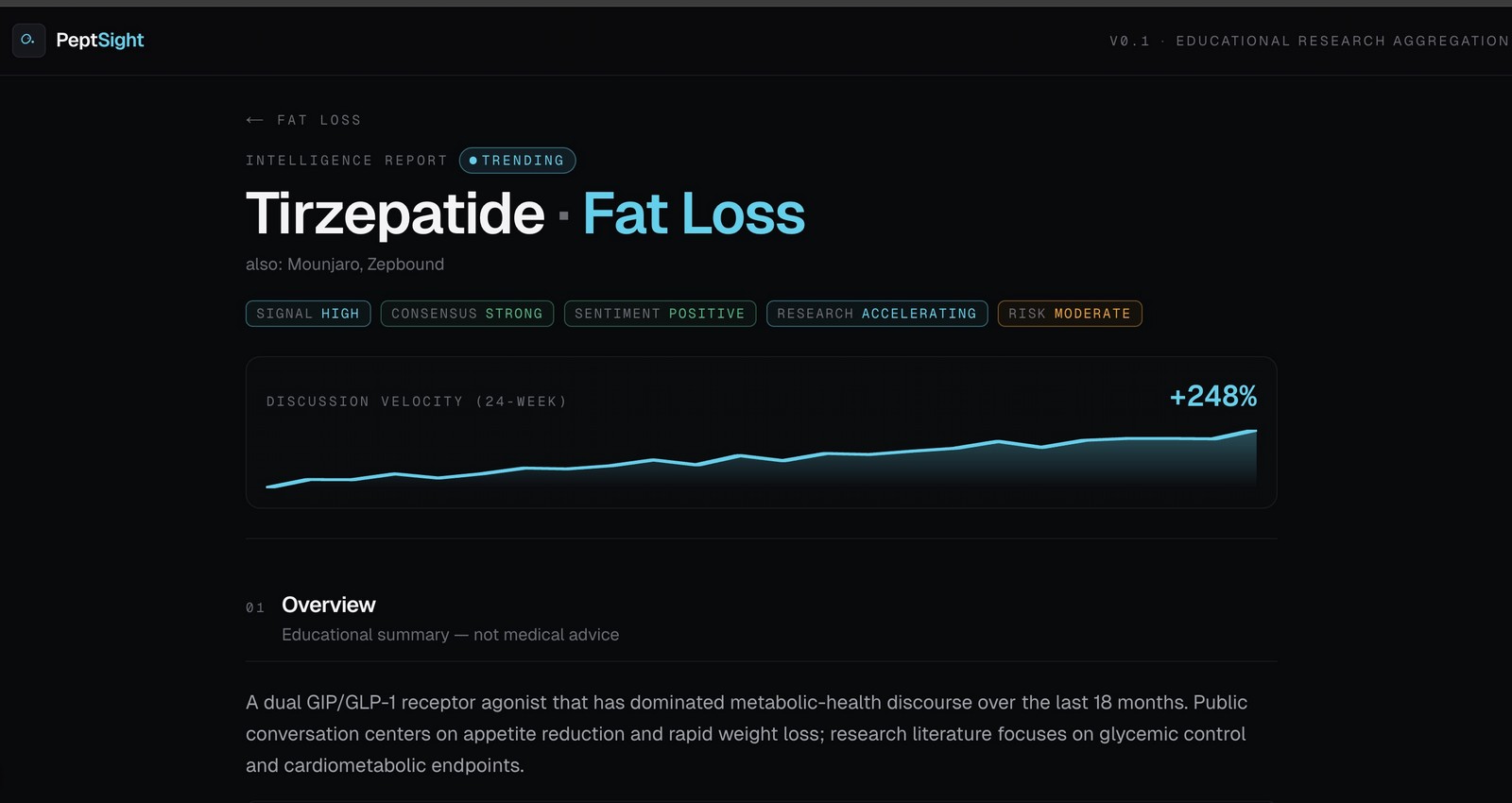
When someone picks a category, an agent identifies the relevant peptides and launches Apify Actors in parallel: a Reddit scraper for community discussion and a Google Search scraper for research papers, educational sites, vendors and telehealth providers. Every source is classified as research, educational, anecdotal or telehealth, then Claude synthesizes everything into a structured report while the agent's progress streams live to the page.
The agent is instructed never to invent studies or give dosing advice, and vendor or telehealth content is never treated as scientific consensus.
I built PeptSight.com, a full-stack Next.js application that surfaces real-time intelligence on peptides by aggregating what people are saying across the web. I designed and implemented an end-to-end ETL pipeline using Apify for data collection and Supabase/Postgres for storage, with a GitHub Actions cron job that refreshes every category every six hours, transforming raw data into application-ready tables optimized for fast client-side loads. I built the API layer in Next.js to serve the frontend from these curated Postgres endpoints.
Next.js, React, TypeScript, Tailwind CSS, Framer Motion, Anthropic SDK (Claude), Apify, Supabase, GitHub Actions.
I built the first version solo in six hours and won 3rd place at the AWS Builder Loft in San Francisco. 🥉 PeptSight was also the only build to receive a separate prize: a LinkedIn post by Alex Cinovoj, CTO and AI enthusiast.
After the hackathon, I kept refining it: moving the data into Supabase with a scheduled refresh, and redesigning the landing page around outcome-based categories.
Check out the post here: LinkedIn post.
 Nadine E.